Plumber Near Me: A Simple Guide to Checking Disciplinary History
When someone types "plumber near me" into a search bar, the usual urgency is easy to understand. A water heater starts leaking on a Sunday. A kitchen drain backs up before guests arrive. A business owner needs a commercial plumber because a restroom line will not clear. In those moments, most people compare response time, price, and reviews. Fewer people take the extra step of checking disciplinary history.
That extra step matters.
A plumber works on systems that affect sanitation, water damage risk, building safety, and repair costs that can climb fast. In Hawaii, plumbing work is regulated by the state Department of Commerce and Consumer Affairs, and consumers can verify a plumber’s license status, expiration date, and disciplinary history through the official license search tools. If you are hiring a plumber Honolulu homeowners recommend, a plumber Oahu property managers call regularly, or an emergency plumber during a stressful leak, checking that record gives you a clearer picture of who is coming into your home or building.
This is not about assuming every disciplinary entry means you should walk away. It is about slowing down long enough to make a better decision.
Why disciplinary history deserves a look
People often treat licensing like a simple yes or no question. Is the person licensed, or not? That is the baseline, but it is not the whole story. A valid license tells you something important. It does not tell you everything.
Disciplinary history can reveal whether there have been past problems serious enough to become part of the public record. That gives context when you are weighing a bid, especially for work that can become expensive if handled poorly. Think about water heater repair, sewer line repair, or leak detection inside walls. A mistake there is not just inconvenient. It can lead to damaged finishes, mold concerns, https://telegra.ph/Sewer-Line-Repair-and-Inspection-Expectations-in-Honolulu-09-30 repeat service calls, and permit complications.
On Oahu, this matters even more because plumbing work is tied to code compliance and inspections when permits apply. The City and County of Honolulu plumbing code provides that plumbing and drainage work authorized by permit is inspected for compliance, and Honolulu’s permitting guidance says plumbing work must be performed by contractors licensed by the State of Hawaii. If a job should have been handled by a licensed professional, that is not a gray area.
I have seen consumers focus so heavily on the lowest estimate that they miss the larger risk. Saving a few hundred dollars up front can look smart until the same drain has to be opened twice, the same leak reappears after patchwork repair, or a permit issue delays a remodel. A quick check of public licensing information does not solve every problem, but it can help you avoid preventable ones.

Start with the state record, not the marketing
A company website can tell you what a business wants you to see. The state record tells you what the regulator has on file.
In Hawaii, the official license search tools let consumers verify whether a license is active, whether it has expired, and whether there is disciplinary history. That should be your first stop, not the last. Reviews, referrals, and personal impressions still matter, but they should sit on top of verified state information, not replace it.
This is especially important because the public often uses the word plumber loosely. A truck, a logo, or a polished online profile does not tell you whether the actual plumbing work will be performed by someone who is properly licensed. Hawaii’s DCCA specifically says that plumbing contractors must employ licensed plumbers to perform the actual plumbing work. That point is easy to miss. You are not just hiring a brand. You are hiring the people who will physically do the work.
For homeowners, that distinction often comes up on jobs like drain cleaning, fixture replacement tied to permit work, or a deeper repair after leak detection identifies a hidden problem. For business owners, it matters even more. A commercial plumber may be sent by a larger firm, but the same basic question applies: who is licensed, what is their status, and is there disciplinary history attached to the relevant license?
What you are actually checking
When people hear "disciplinary history," they sometimes imagine a dramatic blacklist. The reality is more practical. You are checking whether the state record shows any disciplinary action, while also confirming current license status and expiration.
That combination matters because an expired license and an active license are not the same thing, even if the company name is familiar. Hawaii’s contractor renewal information says contractor licenses renew by September 30 of every even-numbered year, with specific on-time renewal windows for each period. Separately, Hawaii’s plumber renewal requirements currently require active licensed plumbers to show proof of continuing competency in the 2021 Uniform Plumbing Code for the licensing period running from July 1, 2024 through June 30, 2027. That is not trivia. It tells you that the state expects ongoing competency and current status, not just a credential earned years ago.
For a customer, this means a proper check is not limited to "Do they have a number on the truck?" It means looking for current standing and whether any public disciplinary information appears alongside that record.
Here is a short, sensible way to approach it:
- Look up the license in Hawaii’s official state search tools.
- Confirm the license is active and note the expiration information.
- Check whether disciplinary history appears in the record.
- Make sure the contractor and the person doing the plumbing work are presented honestly.
- If the project is large or permit-related, verify that you are dealing with a properly licensed contractor.
That process takes far less time than cleaning up a bad hire.
A disciplinary record is a signal, not an automatic verdict
This is where judgment matters.
Consumers sometimes make one of two mistakes. The first is ignoring disciplinary history entirely. The second is treating any disciplinary entry as proof that a plumber should never be hired. Neither approach is especially careful.
A record needs context. A pattern of serious problems is different from an older matter that has to be weighed alongside present license status. The state’s tools help you identify whether there is history to examine. Your job is to use that information as one factor in the hiring decision, not the only factor.
Say you are choosing between two companies for sewer line repair. One has a clean, current state record. The other has a disciplinary history entry and gives vague answers when asked about licensing. Even without knowing every detail behind the record, that comparison tells you something useful about risk and transparency.
Now take a less urgent example. You need water heater repair, and the first available company has a valid license status but a history you want clarified. In that case, it may be worth making one more call and comparing with another licensed plumber Honolulu residents use for similar work. Urgency changes the timeline, but it should not eliminate common sense.
The larger point is simple. Disciplinary history should prompt questions. It should not replace them.
Why this matters more on bigger jobs
Not every plumbing call carries the same risk.
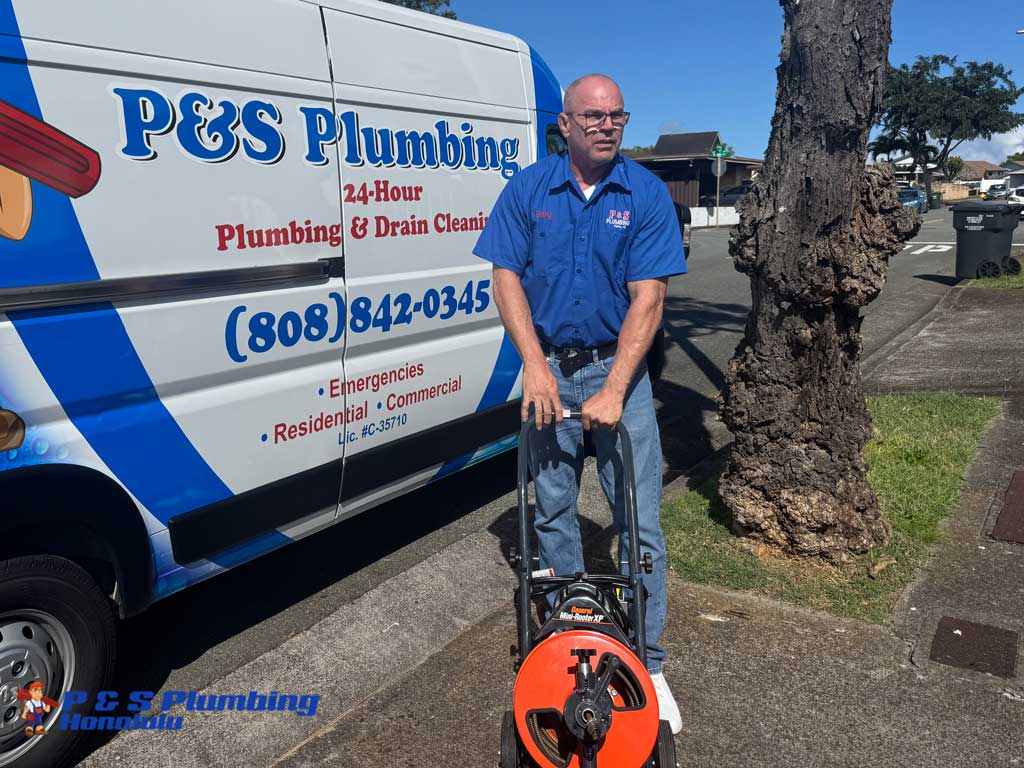
A simple service visit for a minor issue and a major repair involving walls, slab areas, or long piping runs do not expose you to the same level of cost. Hawaii’s DCCA advises hiring a licensed contractor for projects over $1,500 in labor and materials, or for any project that needs a building, electrical, or plumbing permit. That threshold is useful because it reminds consumers that once the job grows, the stakes usually grow with it.
On larger projects, a disciplinary check becomes less like a nice extra and more like basic due diligence. A few common examples come to mind. Leak detection can be straightforward, but if the source turns out to involve concealed piping, the repair may quickly move into permit territory depending on scope. Sewer line repair can be disruptive, costly, and difficult to revisit once surfaces are closed up. Commercial plumbing work can affect tenants, customers, and operating hours. In each case, a little verification up front is much cheaper than a dispute later.
Honolulu’s permitting guidance also notes that permit valuation includes plumbing, heating, air conditioning, and other permanent work when calculating fees. That may seem like an administrative detail, but it reinforces a broader reality. Plumbing is part of regulated building work, not casual handyman territory when permits or larger budgets are involved.
The special case of emergency calls
The hardest time to make a calm decision is during a plumbing emergency.
Water is moving, ceilings are staining, or a drain line is backing up into an occupied space. In that moment, the phrase "emergency plumber" becomes less of a search term and more of a plea. People grab the first number that answers.
Sometimes you do have to move quickly. Even then, there is value in a two-minute check. If Hawaii’s official tools let you verify status and disciplinary history, that is time well spent while you are waiting for the truck to arrive. If you are calling for urgent water heater repair, a burst connection, or fast drain cleaning after a backup, you may not have the luxury of a deep comparison, but you can still protect yourself from the most obvious mistake, hiring without any verification at all.
If a company pressures you to skip questions because the situation is urgent, that should raise your guard, not lower it. A legitimate emergency does not erase the need for a valid license. If anything, the pressure of the moment makes verification more important.
I have found that homeowners usually regret the checks they skipped, not the checks they made. A state search is one of the few practical safeguards that still works well under time pressure.
Don’t confuse permits, licensing, and inspections
These ideas are related, but they are not interchangeable.
Licensing tells you whether the professional or contractor is authorized and in good standing according to state records. Permits apply when the work requires official approval before the job proceeds. Inspections are how permitted work is checked for compliance. On Oahu, plumbing and drainage work authorized by permit is inspected for compliance. That inspection function is important, but it does not relieve the customer of the responsibility to hire properly in the first place.
A common misunderstanding is thinking that if a job will be inspected, licensing becomes less important. In practice, both matter. Honolulu’s permitting guidance says all plumbing work must be performed by contractors licensed by the State of Hawaii. The inspection is not a substitute for hiring a qualified, properly licensed professional. It is one part of the system.
This matters on remodels, fixture relocations, and other projects where people are tempted to save money by using someone who is "experienced" but not properly credentialed. Once a permit enters the picture, the expectation is clear. And if the total project cost rises above the state threshold or includes permit-required work, DCCA already advises using a licensed contractor.
How to use what you find
Once you have checked the record, the next step is interpretation. The goal is not to become your own regulator. The goal is to make a more informed hire.
A clean state record does not guarantee a perfect experience. A disciplinary record does not automatically make a contractor unusable. The record simply gives you verified information that belongs in your decision.
Use it alongside practical questions. Are they clear about who will perform the work? Are they candid when you ask about license status? Does the scope sound like something that may require a permit? If you are comparing bids for leak detection or sewer line repair, are you actually comparing the same scope, or is one estimate vague enough to hide future add-ons?
One of the best habits on the customer side is writing down what you saw in the state record before you call. Note the license status, the expiration information, and whether disciplinary history appears. That way, you can ask direct, simple questions instead of relying on memory in the middle of a sales conversation.
This is also where reviews need to be kept in proportion. Online feedback can help you understand scheduling, communication, and punctuality. It does not replace state verification. A well-liked company can still have issues you should know about. A less polished company can still have a clean, current record and do solid work.
Continuing competency is not a small detail
One verified fact from Hawaii’s renewal requirements deserves more attention than it usually gets. Active licensed plumbers currently must show proof of continuing competency in the 2021 Uniform Plumbing Code to renew for the present licensing period.
For consumers, that should be reassuring. Plumbing codes are not static. Requirements change, materials evolve, and the standard of care moves with them. You do not need to know the code book yourself to appreciate what this means. The state is not treating plumbing as a trade where old knowledge alone is enough.
That is one reason current status matters so much. If you are hiring a plumber Oahu homeowners trust for anything beyond the simplest service call, the value is not just that they were licensed once. It is that they remain active under the current renewal framework.
This becomes more meaningful when the job touches long-term systems. Water heater work, permanent drainage changes, and line repairs are not one-day purchases in the usual sense. You live with the result for years. A valid, current license and any visible disciplinary history together tell you more than a business card ever will.
A practical standard for homeowners and property managers
If I had to reduce the whole subject to a plain working standard, it would be this: verify before you hire, especially when the job is expensive, urgent, permit-related, or likely to affect hidden parts of the building.
That standard works whether you need a residential plumber, a commercial plumber, someone for routine drain cleaning, or an emergency plumber after hours. It also works whether you are calling from Honolulu or elsewhere on Oahu, because the core state checks remain the same. You are looking for official confirmation of license status, expiration, and disciplinary history through Hawaii’s public tools.
Keep this short checklist in mind when the pressure is on:
- If the job is over $1,500 or needs a plumbing permit, treat licensing as non-negotiable.
- Verify through the official Hawaii license search tools, not just a website or ad.
- Check current status and expiration, not just whether a license number exists.
- Read any disciplinary history as useful context, then ask follow-up questions.
- Confirm that the actual plumbing work is being performed by licensed plumbers.
That is a straightforward standard, and it fits real life. It does not require legal training or construction experience. It just requires a few careful minutes before you commit.
The quiet value of a simple check
A lot of plumbing decisions are made under pressure, but the best outcomes usually come from disciplined habits. Checking disciplinary history is one of those habits. It costs almost nothing, takes little time, and can save you from making a rushed decision based only on reviews, ads, or whoever answers the phone first.
For Hawaii consumers, the framework is already there. The state regulates plumbing work through DCCA, the official tools let you verify license details and disciplinary history, and the rules around licensed contractors, permits, and inspections are not hidden. What tends to be missing is not information. It is follow-through.
When you search for a plumber near me, the most useful mindset is not suspicion. It is verification. If the record is clean and current, that gives you confidence. If it raises questions, ask them before work begins. That is how people avoid preventable trouble on jobs ranging from basic water heater repair to larger sewer line repair or leak detection work.
Good hiring decisions in plumbing are rarely dramatic. They are usually quiet, methodical, and a little unglamorous. You check the official record, confirm who is licensed, understand when permits matter, and move forward with clearer eyes. That is not complicated. It is just smart.